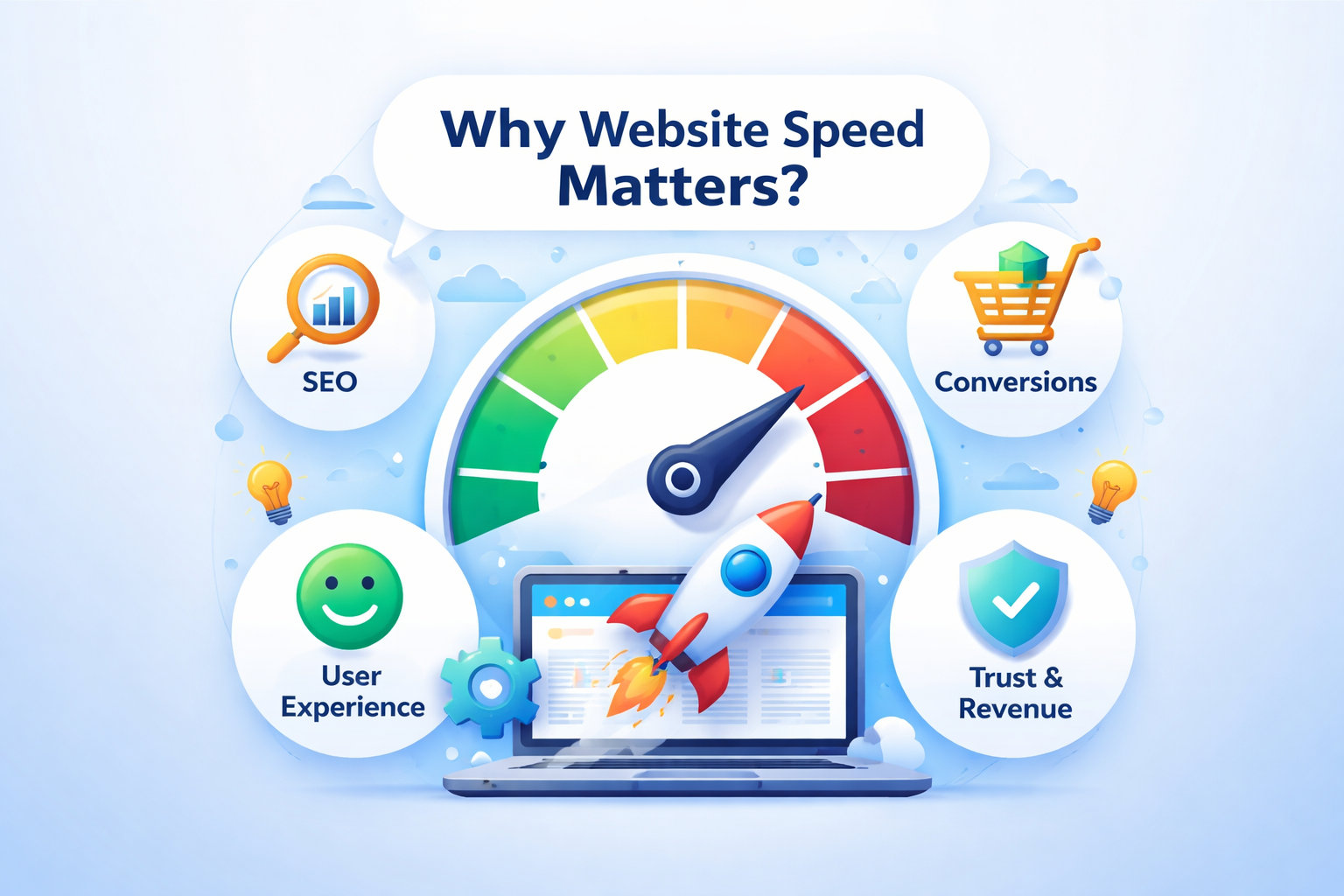
In today’s digital world, website users expect instant results. Whether they’re visiting an online store, a blog, or a corporate website, speed plays a huge role in how they feel about your brand. Studies show that 47% of people expect a website to load in under 2 seconds, and every extra second of delay causes a significant drop in conversions, trust, and engagement.
For growing businesses, bloggers, and ecommerce owners, understanding the importance of website speed isn’t optional — it’s a necessity. In this detailed guide, we’ll dive into why speed matters, how it impacts SEO, and what steps you can take to improve website performance, especially if you’re using shared hosting or WordPress.
What Is Website Speed?
Website speed refers to how quickly your website loads and becomes usable for visitors. Google measures this using metrics such as:
- Largest Contentful Paint (LCP)
- First Input Delay (FID)
- Cumulative Layout Shift (CLS)
- Time to First Byte (TTFB)
These metrics are part of Google’s Core Web Vitals, which directly influence your search rankings.
Why Website Speed Matters
1. It Affects Your SEO Rankings
Google has publicly confirmed that website speed is a ranking factor. A slow website signals poor user experience, and search engines may push faster websites above yours, even if your content is strong. By improving loading time, you increase crawl efficiency and ranking potential.
2. Faster Websites Earn More Conversions
Every second counts. A delay of just 1 second can reduce conversion rates by up to 20%. On ecommerce sites, slow loading pages also cause higher cart abandonment rates. A fast website builds trust and encourages users to complete purchases or submit inquiries.
3. Better User Experience
Visitors don’t want to wait. If your website loads slowly, they may leave immediately (bounce). A fast site ensures better engagement, longer session times, and higher interaction rates.
4. Reduced Bounce Rate
Slow websites drive users away. The average user waits just 2–3 seconds before losing patience. Faster pages create a smoother browsing experience and reduce bounce rates significantly.
Common Causes of Slow Websites
- Poor hosting quality or overloaded shared hosting
- Large images not compressed
- Too many WordPress plugins
- Unoptimized themes
- JavaScript and CSS files not minified
- Uncached pages
- Heavy page builders
Identifying these bottlenecks is the first step toward improving performance.
How Hosting Affects Website Speed
Your website’s hosting provider plays a major role in how fast your site loads. Cheap or low-quality hosting results in:
- Slower server response time (TTFB)
- Inconsistent uptime
- Overloaded servers
- Poor caching mechanisms
- Reduced bandwidth
On the other hand, reliable hosting (like cloud or VPS hosting) offers greater speed, security, and stability for growing websites.
Speed Optimization Tips
1. Use a Fast and Lightweight Theme
Avoid themes with unnecessary animations or bloated code. Fast themes improve performance dramatically.
2. Compress and Optimize Images
Images are usually the biggest contributors to page weight. Use WebP format wherever possible.
3. Enable Browser Caching
This helps frequent visitors load your site faster.
4. Use a CDN
A Content Delivery Network stores your website’s static files on global servers, reducing load time for international visitors.
5. Minify CSS and JavaScript
Reducing file size helps your pages load more quickly.
6. Use Performance Plugins
On WordPress, plugins like caching, image optimization, and lazy-loading boost speed instantly.
7. Upgrade Hosting if Needed
If your site has grown, switching to cloud hosting or VPS can significantly improve performance.
How Website Speed Impacts Marketing
Speed is directly connected to search engine marketing (SEM), social marketing, and email campaigns. When you drive traffic through ads or promotions, slow pages cause you to waste potential leads. Fast websites maximize ROI and deliver better campaign results.
Real-World Website Speed Statistics
- 1 second delay = 11% fewer page views
- 1–3 second delay increases bounce probability by 32%
- 70% of mobile users leave if a page takes more than 3 seconds
- Fast websites earn higher ad revenue and better engagement
These numbers clearly show how speed affects everything — from SEO and marketing to trust and revenue.
Conclusion
Website speed is one of the most important factors for online success. Whether you’re a blogger, business owner, or ecommerce seller, focusing on performance leads to higher rankings, better conversions, and more satisfied users. By choosing the right hosting plan and applying speed optimization techniques, you can build a fast, reliable website that stands out from competitors.
Speed is not just a technical metric — it’s an essential part of your brand and customer experience.